You can know every new products be published here, and witness our growth and innovation.
Date:05-22-2026
Overview
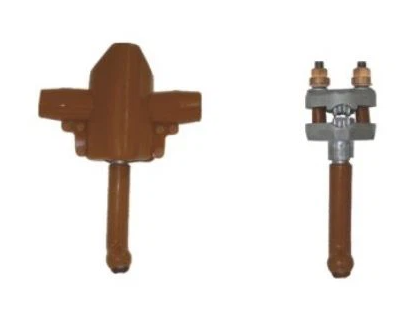
Eliminating the drawback of traditional lightning protection measures that require damaging the conductor insulation layer, this product achieves lightning protection without the need to strip the insulation layer by using specialized piercing electrodes to penetrate the insulation and make tight contact with the conductor core. It combines the advantages of reliable protection, convenient construction, and cost-effectiveness, making it the preferred equipment for lightning protection renovation of distribution network lines. It is widely applied in lightning protection scenarios for various types of overhead insulated conductors.
Features
Reliable lightning protection with precise defense: Utilizing a scientifically designed puncture-type lightning protection structure, it rapidly responds to lightning overvoltage by creating a discharge path through flashover between electrodes, effectively channeling lightning energy into the ground. It efficiently suppresses follow-up power frequency arcing, preventing conductors from being burned or severed by lightning strikes. The protective performance has been proven in real-world applications and is adaptable to various lightning intensity scenarios, particularly excelling in protecting against induced lightning overvoltage-addressing the shortcomings of traditional methods such as installing overhead lightning arresters or surge protectors.
Piercing installation without stripping: The key advantage lies in eliminating the need to remove the insulation layer of overhead insulated conductors. Instead, piercing electrodes penetrate the insulation with sharp teeth, making tight contact with the internal conductor. This ensures excellent electrical conductivity while preventing issues such as conductor corrosion and strength degradation caused by insulation damage. After installation, the seal is highly effective, preventing water ingress into the insulation layer that could otherwise damage the conductor.
Wide adaptability and strong compatibility: Available in various specifications, it can be flexibly selected based on the nominal cross-sectional area of overhead insulated conductors (e.g., 70–240 mm²), compatible with different types of line insulators such as PS15, P15, and P20. It supports both copper and aluminum overhead insulated conductors and is widely applicable to various overhead insulated lines, including unidirectional and bidirectional power supply systems, without requiring extensive modifications to existing lines.
Easy installation and cost-effective: The simple structural design with standardized interfaces enables quick and efficient setup, requiring no specialized or complex tools. Installation is completed simply by securing the piercing electrode, tightening the nut, installing the grounding electrode, and fitting the insulating cover, significantly reducing labor and construction costs. Compared to metal oxide surge arresters, this product features a simpler structure and lower price, making it suitable for large-scale deployment while also minimizing long-term maintenance expenses.
Easy maintenance and long service life: Made of high-quality metal and insulating materials, it is resistant to high temperatures, corrosion, and aging, capable of withstanding harsh outdoor conditions such as extreme heat, rain, snow, and windblown sand. It features excellent mechanical strength and electrical performance. After installation, only a routine inspection is required before the thunderstorm season, eliminating the need for disassembly and pre-testing like traditional surge arresters, significantly reducing maintenance workload. With a long service life, it ensures stable and reliable operation over extended periods.


Address:No.27, Binhai South 3 road, Yueqing Economic Development Zone, Wenzhou City,Zhejiang Province,China.