You can know every new products be published here, and witness our growth and innovation.
Date:07-07-2026
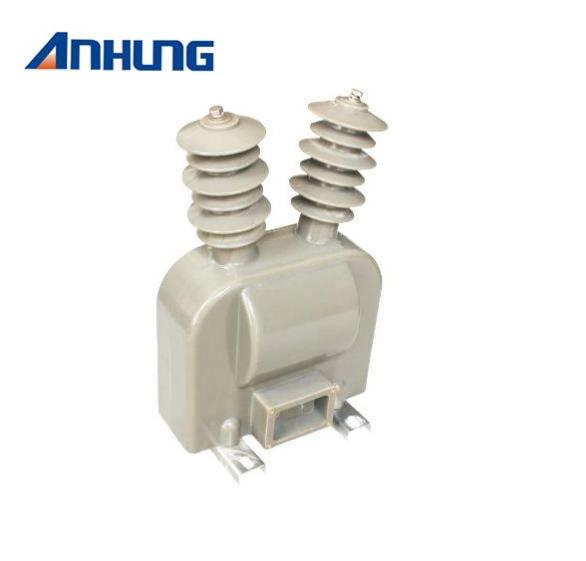
The porcelain casing is the core external insulation component of the voltage transformer, and its integrity directly determines the insulation performance and operational safety of the equipment. First, conduct a full visual inspection of the entire porcelain casing surface, focusing on checking for longitudinal and transverse cracks, tiny trachoma, edge burrs, chipping damage and glaze peeling. No visible defects that affect insulation and mechanical strength are allowed on the casing.
Secondly, inspect the bonding and sealing part between the porcelain tube and the upper metal cover. Check whether the sealing glue is uniform, dense and free of cracking, aging, falling off and gap leakage. The bonding interface shall be tightly fitted without gaps. Finally, perform a manual fastening test: gently pull and shake the porcelain sleeve radially and axially with moderate force. The sleeve shall be fixed firmly without displacement, shaking or loosening. Any loose sleeve assembly is unqualified and needs to be disassembled, re-sealed and fixed.
The insulating oil inside the oil-immersed voltage transformer undertakes the dual functions of internal insulation and heat dissipation, and the oil level height must strictly comply with the factory design standards. First, inspect the oil level indicator (oil gauge): check whether the oil gauge window is clean and transparent, without dirt blockage, oil scale blurring, breakage and leakage. Confirm that the oil gauge indication is sensitive and accurate, and there is no internal blockage causing inaccurate oil level display.
Check the actual oil level height strictly in accordance with the equipment technical requirements. The standard oil level of conventional voltage transformers is 5–10 mm below the fuel tank cap. Analyze the hidden dangers of abnormal oil levels: if the oil level is too high, the internal sealed space of the transformer is insufficient. After the equipment is put into operation, the insulating oil will expand with heat, resulting in excessive internal pressure, which may cause seal cracking, oil leakage, and even casing bursting in severe cases; if the oil level is too low, the internal winding and iron core cannot be fully immersed in insulating oil, which will lead to poor heat dissipation, local overheating of the equipment, accelerated insulation aging, and even insulation breakdown and equipment burnout.
For unqualified oil levels, perform standardized treatment: drain excess oil for over-high oil level, and supplement qualified insulating oil of the same model for under-low oil level, and recheck the oil level after treatment until it meets the standard.
Carry out a comprehensive no-dead-angle inspection on the whole outer casing, welding joints, flange connections and sealing surfaces of the voltage transformer to check for oil leakage, oil seepage and oil stains. Focus on key parts such as the upper cover sealing port, fuel tank welding line, valve connection and bottom flange. Slight oil seepage and obvious oil leakage are both unqualified phenomena.
If oil leakage and seepage defects are found, the equipment shall be immediately shut down for rectification in accordance with standardized procedures: lift out the internal iron core and winding components after power-off and pressure relief, carry out targeted maintenance on the leakage points (repair welding for welding crack leakage, replace sealing gaskets for interface leakage, and re-glue and seal for aging seal parts). After the maintenance is completed and the parts are reset, drain and replace the internal insulating oil, and conduct vacuum oil injection treatment as required to ensure no residual air and impurities inside the equipment.
In addition, inspect the flexibility and tightness of the fuel tank control valve. Manually rotate the valve switch repeatedly, and the valve shall operate flexibly without jamming, stuck rotation and inflexible switching. When the valve is fully closed, it shall be tightly sealed without oil leakage; when fully opened, the oil passage shall be unobstructed. For valves with jamming or poor sealing, replace the valve accessories in time to ensure the normal oil draining and oil injection functions of the equipment.
4.1 Installation fixation inspection: Check whether the voltage transformer is firmly installed on the base support, whether the fixing bolts are complete, tightened and anti-loose measures are in place. The equipment shall not tilt or shake, and the installation horizontal and vertical deviation shall meet the power equipment installation specifications.
4.2 Wiring and grounding inspection: Check whether the primary and secondary wiring terminals are firmly connected, with no loose wires, oxidation and poor contact. The wiring specification is neat, and the insulation layer of the wire is intact without damage. The grounding device shall be reliably connected, the grounding wire specifications meet the requirements, and the grounding resistance is qualified to ensure equipment and personal safety.
4.3 Overall cleaning and appearance inspection: Clean the surface dust, dirt and sundries of the equipment to keep the casing and shell clean. Check again for all hidden defects, confirm that all inspection items are qualified, and record the inspection data truthfully to form a complete installation inspection record, which can be put into operation only after acceptance is qualified.


Address:No.27, Binhai South 3 road, Yueqing Economic Development Zone, Wenzhou City,Zhejiang Province,China.