You can know every new products be published here, and witness our growth and innovation.
Date:06-10-2026
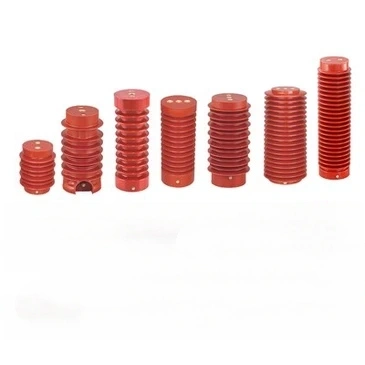
High Voltage Epoxy Resin Switchgear Sensor is an embedded or integrated sensing device installed inside the switchgear. It is used to monitor critical operating parameters (such as temperature, partial discharge, mechanical position, etc.) non-contactingly. The key feature of this sensor is that it uses epoxy resin as the insulating and encapsulating material to adapt to the harsh environment inside the switchgear, which includes high electric fields, high temperatures, and strong electromagnetic interference.
I. Advantages
1.Insulation protection: The epoxy resin has extremely high dielectric strength and mechanical strength, which can effectively isolate high-voltage live bodies and prevent the sensor from being broken down or experiencing flashover under a strong electric field.
2. Environmental adaptability: Resistant to high temperatures, moisture, and dirt, it can operate stably for a long time within the switch cabinet without being affected by condensation or dust.
3. Compact structure: Usually designed as a miniaturized and modular structure, it can be directly embedded in insulators or installed in the limited space within cabinets, without occupying additional volume.
4. Anti-interference capability: The epoxy resin packaging can effectively shield external electromagnetic interference, ensuring the accuracy and stability of the sensor signal.
II. Main Types
Depending on the different monitoring objects, the common epoxy resin switch cabinet sensors mainly fall into the following categories:
Temperature sensor
Function: Monitor the real-time temperature of busbar connection points, circuit breaker contacts or cable joints to prevent overheating faults caused by poor contact.
Form: Usually, optical temperature measurement or wireless temperature measurement technologies are adopted. The sensor probe is embedded in the epoxy resin insulator to achieve high-voltage isolation.
Partial discharge sensor
Function: Detect local discharge signals within insulating materials and issue warnings for insulation deterioration.
Form: Usually, it is a UHF sensor or an ultrasonic sensor, using epoxy resin as the antenna window or acoustic coupling medium.
Position sensor
Function: Detect the open/close position of circuit breaker carts, disconnectors, or grounding switches.
Form: Utilizing magnetic induction or photoelectric principles, the high voltage is isolated by an epoxy resin housing, and a switch quantity signal is output.
Gas sensor
Function: Monitor the density of SF6 gas or its decomposition products (applicable only to GIS or gas-filled cabinets).
Form: The sensor probe directly contacts the gas and is sealed airtightly using an epoxy resin seal.
III. Typical Application Scenarios
Centralized switch cabinet (KYN28): Used for monitoring the position of circuit breaker carts and the temperature of contacts.
Gas-insulated switchgear (C-GIS): Used for monitoring the state of SF6 gas and internal partial discharge.
Ring main unit (RMU): Used for monitoring the status of load switches and the temperature of cable heads.
IV. Selection and Maintenance Key Points
Selection: It is necessary to confirm whether the rated voltage and insulation level (coulomb distance) of the sensor match those of the switch cabinet, and whether the output signal type (analog/digital) is compatible with the monitoring system.
Installation: The installation location should be away from strong electromagnetic interference sources. The sensor housing (epoxy resin) must be reliably grounded to prevent the accumulation of static electricity.
Maintenance: Regularly inspect the appearance of the sensors for any cracks, dust accumulation, and check if the connection terminals are loose. For temperature sensors, calibration should be performed regularly to ensure accuracy.


Address:No.27, Binhai South 3 road, Yueqing Economic Development Zone, Wenzhou City,Zhejiang Province,China.