You can know every new products be published here, and witness our growth and innovation.
Date:08-19-2026
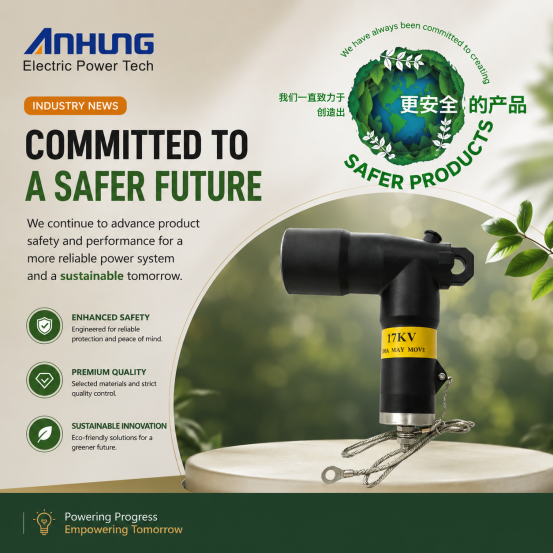
Lots of field-service electricians have run into tricky troubles while setting up elbow-style zinc-oxide surge arresters for pad-mount transformers. As the core over-voltage protection component for integrated transformer units, all pre-commission tests decide the long-term stability of power-distribution gear.
Common operational errors will shorten component lifespan, including insulation tests under humid weather, outdated rectified high-voltage gear, or keeping the arrester connected during power-frequency withstand-voltage tests. Careless mistakes easily cause sudden equipment breakdown.
1. Three Mandatory Pre-operation Tests
1.1 Insulation-resistance Inspection Wipe the arrester surface clean and carry out tests on dry sunny days with a 2500-V megohmmeter. Qualified standard: Insulation Resistance ≥10000 MΩ
1.2 1mA DC Reference Voltage (U₁mA-DC) Adopt dedicated DC high-voltage generator with ripple factor ≤3%. Old-style silicon-rectifier test tools are forbidden. Qualified standard: Voltage ≥25 kV
1.3 DC Leakage Current (IL) under 75% U₁mA-DC Lower test voltage and record current reading. Qualified standard: Leakage Current ≤50 μA
Instrument rule: Class 0.5-grade high-precision digital meters, read data from the high-voltage side
⚠️ Critical Ban: Elbow-type ZnO arrester cannot undertake power-frequency withstand-voltage test. Disconnect it before busbar high-voltage inspection
2.1 Connect three parts together: arrester ground lead, transformer metal shell, low-voltage-side neutral point
2.2 Earthing wire: 2.5 mm² copper cable
2.3 Standard: Whole-system ground resistance <10 Ω
2.4 Check broken wires and poor contact before installation
3.1 Only insulated operating rods are permitted; never touch the arrester with bare hands
3.2 Clean the arrester and matching bushing, apply thin-layer lubricant on the arrester inner wall
3.3 Push the component inward until the yellow marker line fully disappears; wipe off redundant grease
3.4 Seal the bushing port with a special insulating cap after removal for dust-proof, moisture-proof and insulation protection
Growing urban old-grid renovation projects raise the market demand for qualified elbow surge arresters. Proper installation greatly lowers lightning-triggered equipment failure risk for outdoor power-distribution facilities.


Address:No.27, Binhai South 3 road, Yueqing Economic Development Zone, Wenzhou City,Zhejiang Province,China.