You can know every new products be published here, and witness our growth and innovation.
Date:06-30-2026
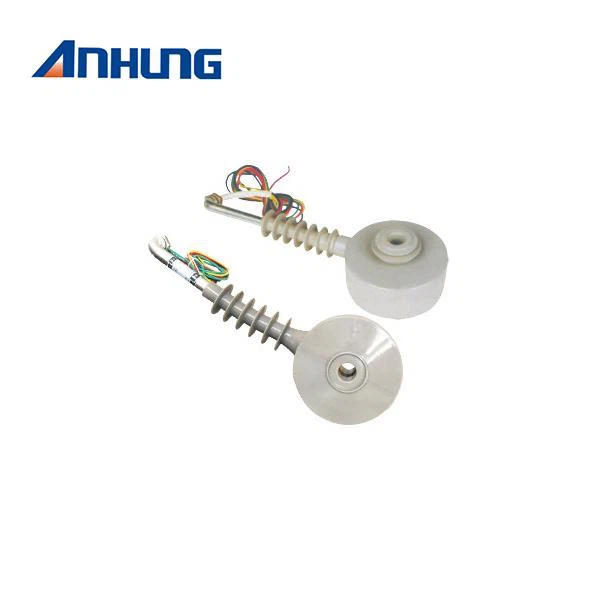
Applicable Switchgear: ZW32 Outdoor Pole-mounted Vacuum Circuit Breaker
Rated Voltage: 12kV
Mounting Type: Through-core (split-core). An openable split opening is designed at the bottom, allowing direct clamping onto the outgoing copper busbar or cable of the circuit breaker without cutting the conductor, enabling extremely convenient installation.
Insulation Material: Cast epoxy resin (some models are externally coated with silicone rubber to improve weather resistance).
As ZW32 current transformers operate outdoors for long-term service integrated with circuit breakers, typical faults mainly occur in insulation, wiring and overload conditions.
Symptoms: The transformer emits a distinct buzzing noise, discharge sparks appear at secondary terminals, and energy meters or protection devices show zero readings. Causes: Loose secondary wiring terminals with poor contact, or accidental disconnection without short-circuiting during maintenance. Hazard: An open circuit instantly generates several kilovolts of high voltage, which will easily break down insulation, burn out the transformer and even trigger an explosion.
Symptoms: Cracked and blackened epoxy housing with burnt internal windings. Causes:
Moisture ingress: Poor sealing allows water vapor penetration, resulting in reduced insulation resistance.
Pollution flashover: Heavy surface contamination causes surface discharge under humid weather conditions.
Overvoltage surge: Lightning strikes or switching overvoltage impacts.
Symptoms: Abnormally high housing temperature; resin dripping and smoke emission in severe cases. Causes:
Long-term overload: Continuous line current exceeding the rated value of the transformer.
Poor contact: Oxidation or loosening of primary (copper busbar) or secondary wiring terminals creates excessive contact resistance and subsequent heat generation.
Symptoms: Audible crackling discharge noise inside the unit. Causes: Manufacturing defects (e.g., air bubbles, foreign impurities) or insulation aging, which distort the internal electric field distribution.
Maintenance Suggestions
Prevent Open Circuit: During maintenance, make sure to short-circuit the secondary side first. Do not disconnect the wires while the equipment is powered on.
Prevent Moisture Infiltration: Regularly inspect the seals to ensure the integrity of the housing.
Prevent Flashover: In areas with severe pollution, regularly clean the surface dirt of the transformer.


Address:No.27, Binhai South 3 road, Yueqing Economic Development Zone, Wenzhou City,Zhejiang Province,China.