You can know every new products be published here, and witness our growth and innovation.
Date:10-30-2026
A spare 600A bushing may not attract much attention when a switchgear lineup is first installed. It becomes important later—when a new circuit is added, maintenance is scheduled, or moisture is found inside a cable compartment. By then, the insulating cap fitted to that interface has already done its job quietly, sometimes for years.
That job is more demanding than the word “cap” suggests. A loadbreak insulated cap must fit the bushing correctly, maintain the intended insulating and shielding arrangement, and remain suitable for the surrounding service conditions. A purchasing description such as “15kV, 600A” leaves several of those questions unanswered.
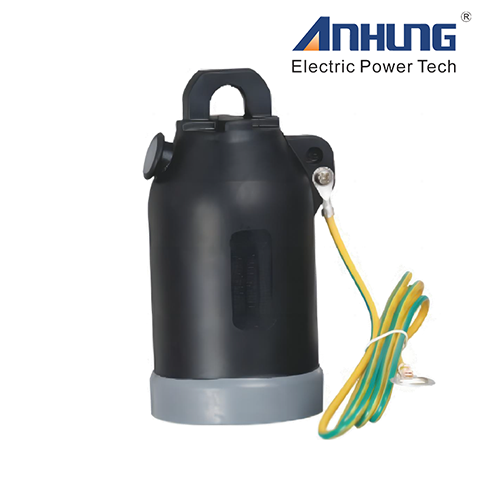
The product references AJYM-15/600 and AJYM-24/600 provide a useful example. They identify 15kV and 24kV versions for 600A applications, but the voltage and current markings alone do not establish compatibility with every bushing. The interface still needs to be checked.
One detail worth examining is the internal connection. The listed design uses a 5/8-inch-11 internal thread. This is precisely the kind of information that can disappear when a technical enquiry is reduced to a price request. A cap may look correct in a photograph and still be wrong for the intended interface.
The material construction also deserves a closer reading. An EPDM insulation layer is paired with a prefabricated semiconductive EPDM outer layer. These are not interchangeable descriptions of the same rubber; they perform different functions within the accessory. The stainless-steel operating ring supports handling during installation and removal, while the grounding eye provides a connection point for the drain wire where required by the design.
Consider a switchgear project with one outgoing way reserved for a future circuit. The buyer knows that the system is 15kV and the bushing is rated at 600A. That is a reasonable starting point, but not a complete specification. Is the cap intended to remain there permanently, or only until the next project stage? Could the installation be exposed to standing water? Which bushing standard and mating arrangement are being used? Each answer can affect the final selection.
The supplied kit offers another practical clue. Cleaning materials, silicone lubricant, installation instructions, and product documentation are not merely packing-list items. They connect the purchased component with the work that must be completed at the interface. Even so, installation belongs with qualified personnel following the equipment and accessory instructions—not with a generic procedure copied from another product.
My preference when reviewing an enquiry is to ask for the bushing drawing or manufacturer’s reference before discussing price. A photograph of the existing interface can also help, provided the thread and dimensions are confirmed separately. For underground service, the buyer should state the actual moisture and submersion conditions rather than relying on the word “outdoor.”
The AJYM-15/600 and AJYM-24/600 references show why a loadbreak insulated cap should be treated as an interface component, not a commodity cover. The right selection begins with the equipment already in the field and ends with a cap whose rating, construction, and documentation match that application.


Address:No.27, Binhai South 3 road, Yueqing Economic Development Zone, Wenzhou City,Zhejiang Province,China.