You can know every new products be published here, and witness our growth and innovation.
Date:01-02-2026
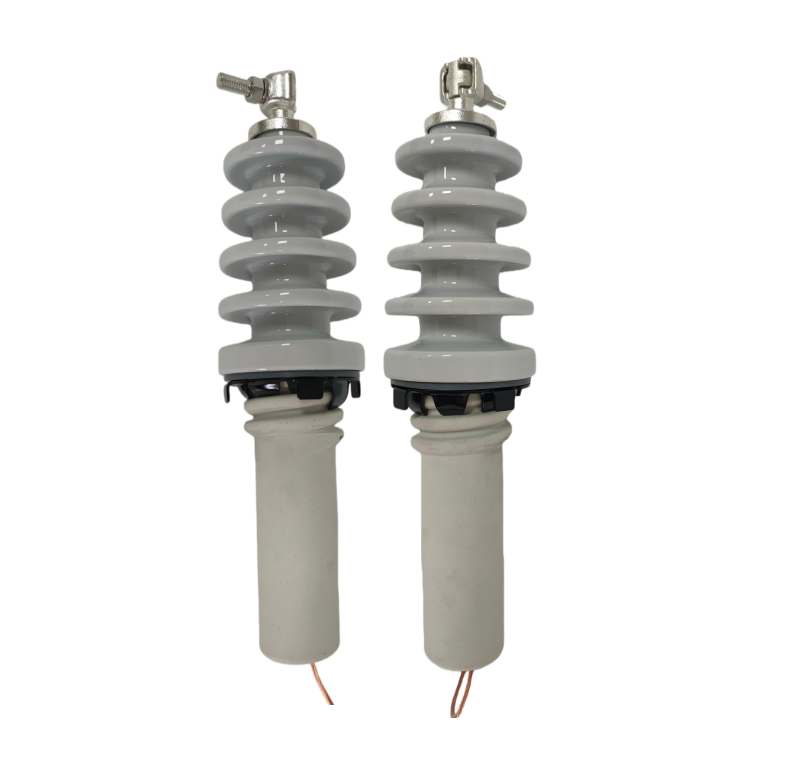
ANSI ceramic bushings are ceramic bushing products that comply with the technical standards set by the American National Standards Institute (ANSI). They are specifically designed to meet the standardized insulation, mechanical support, and safety protection requirements for high-voltage electrical equipment in North America and the global market. It combines the excellent properties of ceramic materials with the strict norms of ANSI standards. It is one of the core categories of high-voltage insulation components in the power system.
I. Core Definition: What is an ANSI Ceramic Bushing?
ANSI ceramic bushings do not refer to a specific form, but are designed, manufactured, and tested in accordance with relevant ANSI standards (such as ANSI C37 series “High Voltage Switchgear Standards”, ANSI/IEEE C57 series “Transformer Standards”, etc.). The core is to ensure the insulation reliability, mechanical stability, and interchangeability of the product in the high-voltage environment through standardized dimensions, performance parameters, and testing procedures, especially suitable for North American power grids and international projects that adopt ANSI standards.
II. Key ANSI Standards Followed
The design and production of ANSI ceramic bushings need to comply with multiple targeted standards. Common core standards include:
ANSI C37.04: Specifies the rated parameters, insulation level, and test methods (such as power frequency withstand voltage, lightning impulse withstand voltage) for high-voltage switchgear (including bushings);
ANSI C37.34: Technical requirements for high-voltage bushings, including dimensional tolerances, mechanical loads (tensile, bending, torsion), and thermal stability performance;
ANSI/IEEE C57.19.01: Standards for transformer bushings, clearly defining the rated voltage, rated current, temperature rise limit, and sealing performance of bushings;
ANSI C29 series: Mechanical strength and electrical performance testing standards for outdoor insulators (including post/through-wall bushings) (such as bending strength, pollution flashover test);
These standards ensure the compatibility (such as installation dimensions being consistent) and reliability (through unified strict testing) of ANSI ceramic bushings among different manufacturers and batches.
III. Structural and Material Characteristics (Optimized Based on ANSI Standards)
The structure of ANSI ceramic bushings is similar to that of general ceramic bushings. However, due to the detailed requirements of ANSI standards, the material selection and detailed design place more emphasis on standardized adaptability:
1. Ceramic Insulator
Material Selection: Preferentially use high-purity aluminum oxide ceramic (Al₂O₃ content ≥ 95%) or silicon dioxide ceramic (as defined by ASTM C609 standard as “electrical ceramic”) to ensure insulation resistance (≥ 10¹³ Ω·cm), dielectric strength (≥ 15 kV/mm), and mechanical strength (bending strength ≥ 150 MPa) meet the standards.
Structural Design:
* Outdoor-type bushings often have the number and spacing of umbrella skirts specified by ANSI standards (such as the diameter difference and umbrella extension length of each section), to meet the creepage distance requirements (such as 10 kV bushing creepage ratio ≥ 25 mm/kV);
* Indoor-type bushings are mostly smooth cylinders or with shallow umbrella skirts, focusing on compact dimensions (complying with ANSI C37.34 dimensional tolerance requirements, such as diameter deviation ≤ ± 0.5 mm).
2. Metal Accessories
The metal end covers/filaments at both ends use steel or copper materials in accordance with ANSI B16.5 standards (such as galvanized carbon steel, stainless steel 304), ensuring corrosion resistance.
The size of the connection terminals strictly follows ANSI standards (such as bolt hole diameter, thread specification), ensuring direct interchangeability with commonly used busbars and cable connectors in North America (no need for additional modification).
3. Sealing and Protection (for outdoor/damp environments) In accordance with the requirements of ANSI C57.19.01, a double-sealed design is adopted (with high-temperature silicone rubber or epoxy resin filling the gap between the ceramic body and the metal attachment), and the “water immersion test” (such as the insulation resistance remaining ≥ 100 MΩ after 24 hours of water immersion) is conducted to ensure that it does not get wet in heavy rain and high humidity environments.


Address:No.27, Binhai South 3 road, Yueqing Economic Development Zone, Wenzhou City,Zhejiang Province,China.