You can know every new products be published here, and witness our growth and innovation.
Date:04-06-2026
A single bad fuse decision can put a complete transformer out: and so will your equipment, your uptime and your budget. The protection of medium-voltage transformers is not glamorous but it is one of those things that do count. And there, in the middle of it all? The fuse.
The MV protection world is dominated by two types: the current limiting fuse and the expulsion fuse. They look similar. They are used to protect transformers. However, they are very different to work with. And choosing the wrong one to use in your application can cost you a lot of money or even your life.
Let’s break it down, plain and simple.
A current-limiting fuse is designed to cut fault currents before they reach their peak. It does this very quickly: it takes only a fraction of a cycle. A silver or copper wire in the middle of the fuse is enclosed by quartz sand. When an error occurs, the element melts, the arc energy is absorbed by the sand and the fault current stopped cold.
The result? The fault is never completely developed. Downstream equipment remains intact. The transformer survives what could have been a catastrophic event.
Medium-voltage systems (between 2.4 kV and 38 kV) use current limiting fuses. They are small, quiet and they do not emit gases or flames in the process of their operation. This makes them suitable for use either indoors or in small-scale switchgear enclosures.
They can be found in pad-mounted transformers, unit substations and metal-enclosed switchgear.
An expulsion fuse operates in a different way. When there is a fault, it utilizes the arc energy itself to expel hot gas using an open tube. This action extinguishes the arc and interrupts the current.
Expulsion fuses are older technology. They are cheap and easy to install on overhead distribution lines and pole-mounted transformers installed outside. They are visible, easy to check, and replaceable in the field.
However, there is a catch here: expulsion fuses are not current limiting. The fault current is allowed to flow to its maximum extent and then it is disconnected. That is to say, the entire impact of that fault energy is absorbed by downstream equipment. This stress accumulates with time. And since they emit hot gases and burning particles during their functioning, they cannot be employed in closed spaces or indoors. They require open air to operate safely.
Here’s a quick comparison so you can see exactly where each fuse type stands:
|
Feature |
Current Limiting Fuse |
Expulsion Fuse |
|
Fault current interruption |
Before peak (fast) |
After peak (slow) |
|
Arc byproducts |
None (silent, clean) |
Hot gases and particles |
|
Indoor use |
Yes |
No |
|
Voltage range |
2.4 kV – 38 kV |
4 kV – 34.5 kV |
|
Cost |
Higher |
Lower |
|
Equipment protection |
High |
Moderate |
|
Replacement |
Factory only |
Field replaceable |
The takeaway? The current-limiting fuse is nearly always a good choice for indoor installations and modern switchgear. Expulsion fuses continue to play a role in outdoor, overhead distribution.
This is where things become even more practical.
Standard fuses can sometimes trip during normal inrush currents, like when a transformer first energizes. That’s a false trip, and it’s a real headache. Enter the dual element time delay current limiting fuse.
The two elements of this fuse are as follows:
The two provide the best of both worlds: patience in harmless inrush events, and lightning-fast response to real faults. This has made the dual element time delay current limiting fuse particularly popular in transformer protection applications, where inrush currents tend to occur during the start-up period.
It minimizes tripping due to nuisance. It prolongs the equipment life. And it still provides you with the quick current-limiting action that protects your transformer when needed.
The dual sensing fuse is one step higher in the chain of innovation. This type of fuse monitors both voltage and current to make protection decisions. The conventional fuses can only feel current. When the current becomes high, they blow.
A dual sensing fuse is also able to sense abnormal voltage conditions and this provides it with a greater view of what is occurring in the circuit. It comes in handy especially in systems where the fault conditions do not necessarily present themselves as extreme overcurrents. But voltage fluctuations are a warning sign of trouble.
The dual sensing fuse provides an additional level of smartness to your protection scheme. It is a more recent technology and is not required in all applications, yet in complex MV systems where reliability is a major concern, it can be a game-changer.
So how do you choose? Here’s a simple way to think about it:
Go with a current limiting fuse if:
Consider a dual element time delay current limiting fuse if:
Look into a dual sensing fuse if:
And if your system involves overhead outdoor distribution with lower available fault currents and you need easy field replacement, expulsion fuses still do the job.
For a full range of current limiting fuses and related protection equipment for medium-voltage applications, check out Ahelek’s fuse product lineup. They carry options built for real-world MV transformer protection needs.
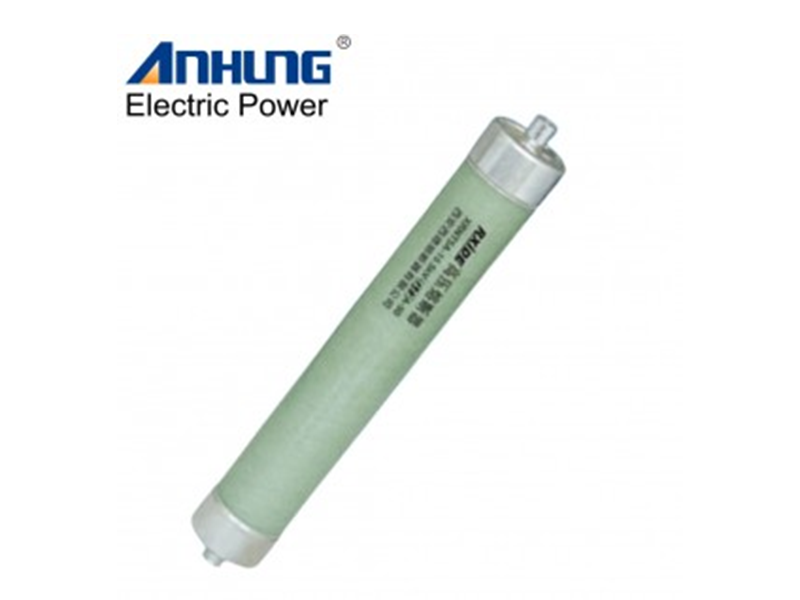
Current limiting fuses and expulsion fuses are both valid tools, but they’re not interchangeable. For most modern MV transformer protection applications, especially indoors, the current limiting fuse wins on every front: speed, safety, and equipment protection.
If you’re dealing with startup surges, step up to the dual element time delay current limiting fuse. If you need next-level sensing capability, the dual sensing fuse is worth a look.
Know your system. Pick the right fuse. Protect your transformer. It really is that simple.


Address:No.27, Binhai South 3 road, Yueqing Economic Development Zone, Wenzhou City,Zhejiang Province,China.